
INSIGHT
The best security operators can't tell you how they do their job
Ask a great operator how they spot an intruder and they'll say they can just tell. They can't — but the real answer is more interesting, and it's the reason watching cameras resisted automation for so long.
8 September 2026
I was talking to a guard-room operator recently about how he spots an intruder on a live camera feed. A site full of workers, machinery everywhere, people coming and going all day — and somehow he can look at a screen and know when one of the figures shouldn't be there.
I asked him how.
"You can just tell," he said.
That's the answer you always get, and it's worth not accepting it, because it isn't true. Nobody can "just tell." So I pushed — how, actually? What are you looking at? And within about thirty seconds the mystery fell apart into a list. He'd just never written it down before.
A guard carries a torch on a night patrol. An intruder usually doesn't — they don't want to be seen.
A guard wears full hi-vis, head to toe, because that's the uniform. Someone there to steal will often throw on half a vest to look like they belong, but it's never quite right.
A guard walks a route — the same route, more or less, every time. An intruder doesn't walk a route. They drift from one piece of machinery to the next, stopping at each one, weighing it up, working out what's worth taking.
And a guard starts from the cabin, inside the fence, and works outward. An intruder comes the other way — over the fence, or through a gate that was left open. Where someone enters from tells you almost everything.
None of that is a feeling. It's a checklist — a precise, four-point behavioural checklist that this man runs in his head every time a figure appears on a screen. He just runs it so fast, and has run it so many times, that it's collapsed into something that feels like instinct. Ask him at the pub and he'd tell you it's a sixth sense. It isn't. It's expertise, worn so smooth by repetition that he's stopped being able to see the working.
This is the thing that made security impossible to automate
There's a name for this. Psychologists call it tacit knowledge — the things we know how to do but can't fully explain. A radiologist who spots a tumour before they can say why. A farmer who reads the weather off the sky. The security operator who "just knows." The knowledge is real and it's valuable, but it lives below the level of language, which makes it maddeningly hard to hand to anyone else — a new hire, a written procedure, or a machine.
And this, more than anything, is why watching cameras has resisted automation for so long. It was never a problem of detection. A motion sensor can tell you something moved. A modern camera can tell you the something was a person. But "a person is on camera four" is not the judgement the operator is making. He's making four judgements at once — torch or no torch, full kit or half a vest, a route or a drift, entered from inside or over the fence — and fusing them into a single call in the time it takes you to read this sentence. You couldn't write that as a rule. Believe me, people tried. Rules-based systems in security have always drowned in false alarms precisely because the real judgement isn't a rule. It's a pattern, learned from thousands of hours of watching.
What actually changed
The reason this is worth writing about now is that the ground has genuinely shifted, and recently.
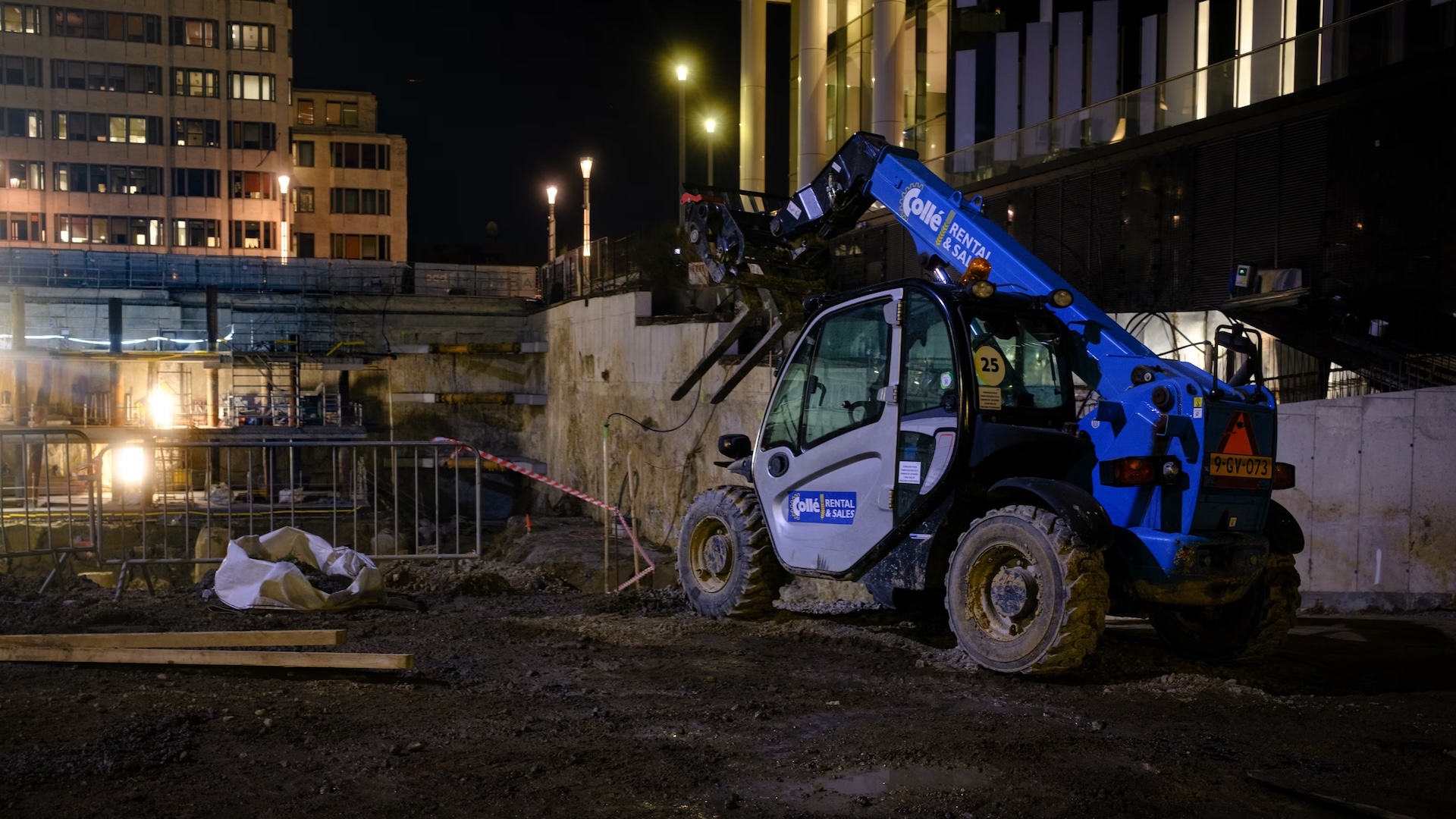
The thing that was missing was never the information. Every one of those tells is visible in the footage — the torch, the half-vest, the path across the site, the point of entry. The camera saw all of it, all along. What was missing was something that could read it the way the operator does: not spotting a person, but understanding a scene, and holding several pieces of context together to reach a judgement.
That's what modern vision-language models can now do, and it's why this moment is different from every previous wave of "AI CCTV". A system can now be taught to notice the same things the operator notices — to treat a figure with no torch, half a vest, drifting machine to machine, having come over the fence, as worth flagging, and a figure doing the opposite as the guard doing his rounds. The expertise that used to live only in one experienced head, and vanish the moment he went home, can be learned and applied.
What this doesn't mean
It would be easy to over-read that, so let me be plain about the limit. This does not replace the operator, and the goal was never to. His judgement is the thing worth having — the point is that a single expert, however good, cannot watch every camera on every site all night, and the moment he looks away from one screen, that camera is unwatched.
What changes is reach. The judgement he makes on the one feed he's looking at can now be made on all of them at once, continuously, with the operator still deciding what actually matters and what to do about it. The instinct stops being a scarce resource trapped behind one pair of eyes. He isn't replaced. He's finally able to be everywhere he was always needed.
The point
Ask a great operator how they do the job and they'll tell you they can't explain it. They're wrong, but understandably so — the explanation is real, it's just been compressed into something faster than words. For the first time, we can decompress it: name the tells, teach a system to watch for them, and apply that expertise across a whole site instead of a single screen.
The information was always in the footage. What was missing was the expertise to read it — and the reach to read it everywhere at once. That's the gap we're closing.
If that's a conversation worth having, Volpex is built to be exactly that layer. Get in touch.